WheelMates House Walkthrough
How the house is structured, how puzzles talk, and what to do when a later room is not on a map yet.
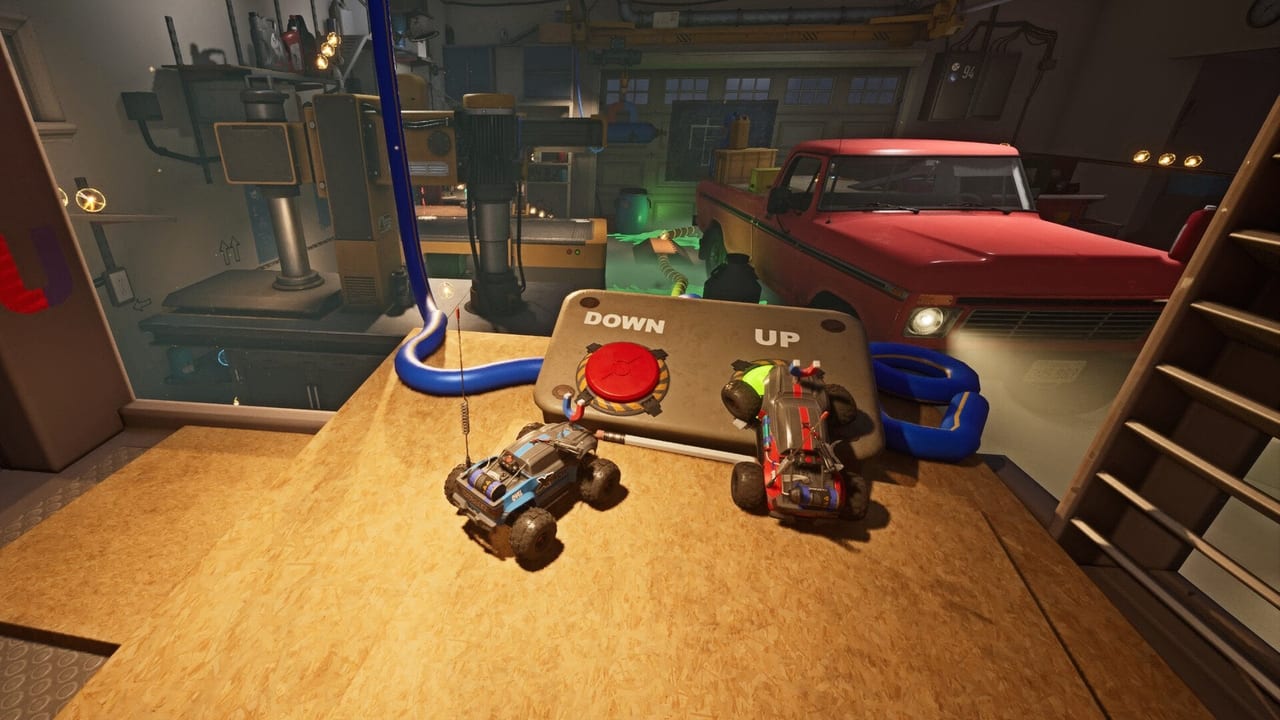
This is a launch-week walkthrough of WheelMates, not a fake atlas of every cupboard in Professor Everett Bloom’s home. Firevolt released the Steam campaign on 1 September 2026. The public demo already taught the opening grammar: Kitchen first, then Garage. Trailers and studio posts add the Backyard, the laboratory, and the rest of a maze-like house that reopens as gadgets arrive. Community maps of later wings are still being drawn. If a guide claims it has a spoiler for every pipe after the Garage, it is guessing. We will not.
What you can learn immediately is the language of the rooms: how objectives appear, how the Journal stores clues, how audio devices hint, and how two-car puzzles are built. Read How to Play if the camera is the real boss. Use Getting Started if you still need a partner. Then treat the house as a Metroidvania you drive, not a checklist of named closets.
How the house is laid out
You are two RC cars answering a call from a missing scientist. The home is also a lab. Everyday furniture is terrain. Progress is gated by cooperation and by tools, not by combat or by a clock. Firevolt’s own framing is that you can drive straight to the next location, but the house tells a bigger story if you slow down. That is the structure: a critical path through oversized rooms, plus optional scans, cards, and hidden paths that feed the Journal.
Named spaces you should expect:
- Kitchen — tutorial driving, first power-ups, tables, appliances, and the first radios. Details on the Kitchen page.
- Garage — a larger, more open floor with hidden routes. Magnet grab and rope swing come into their own here. See Garage.
- Backyard — called out in preview coverage and demo audio as a later outdoor wing tied to antennas and power, not as a room we will fake-map.
- Laboratory and the wider house — the story destination. New gadgets make old rooms readable again.
Gadget order is the real walkthrough spine. Magnetic wheels open metal walls and ceilings. The winch, rope swing, and hookshot solve gaps and levers. Magnet grab (a toggle) lifts covers and moves objects. Jump boosters in press materials exist to clear height. When you earn a tool, turn around. The campaign’s “next room” is often a shelf you already saw and could not use.
Puzzle language (from demo, trailers, and studio notes)
Stop looking for a combat encounter. Look for a job that one car cannot finish.
Hold hazard. One player stays on a switch, holds a cover, or occupies a dangerous mechanism so the other can cross. If you both leave, the path closes. This is the basic “I hold, you go” sentence. Call it out. Swap roles when the return trip needs the other body.
Two-station machines (crane, pipe, claw). Demo players ran a cylinder puzzle that played like an arcade claw: one station owned forward and back, the other owned up and down. Pipes and panels are often split the same way. If a machine has two obvious consoles and nothing happens when you mash one, find the second console instead of ramming the cylinder. Stand on the marks the room paints (arrows, X, highlighted pads) and wait for your partner’s axis to move.
Asymmetrical roles. Hookshot hits a switch your magnet cannot. Magnet grab peels a cover off a button. Magnetic wheels take one car up a duct while the other stays on the floor to catch a dropped part. The Garage leans on this once rope swing exists. Do not both buy the same idea. Split verbs.
Synced pads. Some doors and pumps want both cars on highlighted zones at once. Full sync is a story beat in Kitchen audio (overriding security, unlocking a basement). If an objective says reach two zones, it means two cars, not one car visiting twice.
Traversal gated by a gadget you do not have yet. A metal ceiling with no way up is not a broken jump. A cover you cannot lift is probably magnet-grab later. Note it, drive on, come back. That is why secrets and backtracking share a page in your head even if they are separate articles.
HUD, Journal, and audio hints
Objectives live in the top-right. Read them when they change. “Find a way under the sink,” “reach the highlighted zones,” “get to the red radio” are typical Kitchen sentences. If you ignore the HUD, you will solve the wrong furniture.
The Journal arrived in the Steam Next Fest demo update. It tracks collectibles and narrative pieces so you can keep driving and still reconstruct Bloom’s mess later. Nodes are a direct line to the professor: he guides, explains recent events, and sometimes talks about older days. Scannable objects reveal sides of him he would not volunteer. Memory cards (SD-style collectibles in the demo) hold longer arguments and lab gossip, including the kind of note that complains about a fridge full of the wrong chemicals. None of these are required to roll the next door. All of them make the house feel like a place instead of a track.
Audio hint devices are radios, nodes, and other chatterboxes placed on the route. They repeat useful verbs when you are spatially lost. They will not tell you your partner is on the wrong station. Use them as a hint layer, then look at the room: wires, arrows, ceiling magnets, and the second panel you have not visited.
Pause exists. Stuck-reset exists. Falling off a counter is not a game over. There are no timers, so a five-minute stare at a crane is allowed. The only hard fail is leaving voice. WheelMates has no in-game voice chat; keep Discord or the sofa mic open for hold-hazard timing.
A honest route for launch week
- Finish the Kitchen with the first power-ups. Learn HUD, radios, and “I hold, you go.”
- Enter the Garage. Unlock magnet grab and rope swing. Hunt hidden paths without expecting a public map of every vent.
- Whenever a new gadget drops, return through rooms you already understand. The Metroidvania loop is the walkthrough.
- Follow story objectives toward Backyard and laboratory spaces as the game names them. Write down gated ledges for secrets instead of brute-forcing jumps.
- Use the Journal after sessions. Firevolt’s length estimate is about six hours for story and about eight with secrets and mini-games. Your map will fill in over that window; ours will too.
We will expand named-room steps as players document them. Until then, this page stays a grammar book. If a later guide invents a spoiler-heavy closet list it cannot source, ignore it. Bloom’s house is large, launch is new, and the launch review is honest about that. Drive the sentence the room is speaking. The proper noun for the next corridor can wait until someone has actually been there with both cars.
Frequently Asked Questions
Quick answers for two-player RC sessions.
Will this walkthrough spoil every room?
No. Launch-week maps of later wings are still being built. We document Kitchen, Garage, HUD tools, and puzzle types from the demo and official material, not invented closets.
Where do I look for the next objective?
Top-right of the HUD. Then listen for radios and nodes. The Journal stores the story pieces you already found so you can keep driving.
A machine has two panels and nothing happens. Now what?
It is probably a two-station puzzle. One player takes one axis or one console, the other takes the second. Stand on the marked pads and coordinate; do not ram the object.
Should we split up or stay together?
Stay in voice, not necessarily in the same square. Asymmetrical puzzles want you apart on purpose. If you cannot hear each other, you are playing the wrong way.
When should we backtrack?
Every time you unlock magnetic wheels, rope swing, magnet grab, or another traversal tool. Old rooms are the next rooms. See secrets for collectibles hiding in those revisits.
Is there a timer if we take too long?
No. WheelMates is player-paced. Take the stare. Reset if you fall. The house does not punish slowness.